

Single Zipper vs. Double Zipper Bags: How to Choose
HOME / ARTICLE
Single and double zipper bags create different closure structures and user experiences. Compare them by application, filling method and handling—not by track count alone.
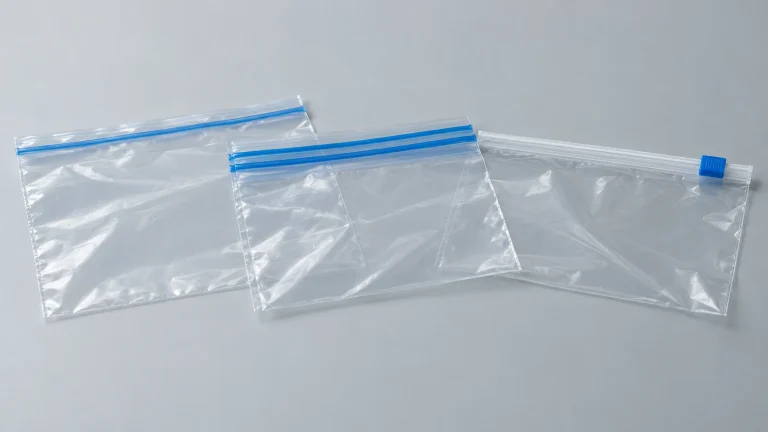
The visible difference is simple: a single zipper bag has one press-to-close track, while a double zipper bag has two parallel tracks.
The purchasing decision depends on more than that number. Consider who will use the bag, what it will hold, how it will be filled, how often it will be reopened and how the finished product will be presented.
In this article
• What is a single zipper bag?
• What is a double zipper bag?
• The main differences
• Choose according to the application
• Consider the person using the bag
• Review the complete bag
• Do not assume double always means “better”
• When should you review both?
• What to share for a recommendation
• Not sure which closure fits your project?
Compare the closure profile together with the bag construction and intended use.
What is a single zipper bag?
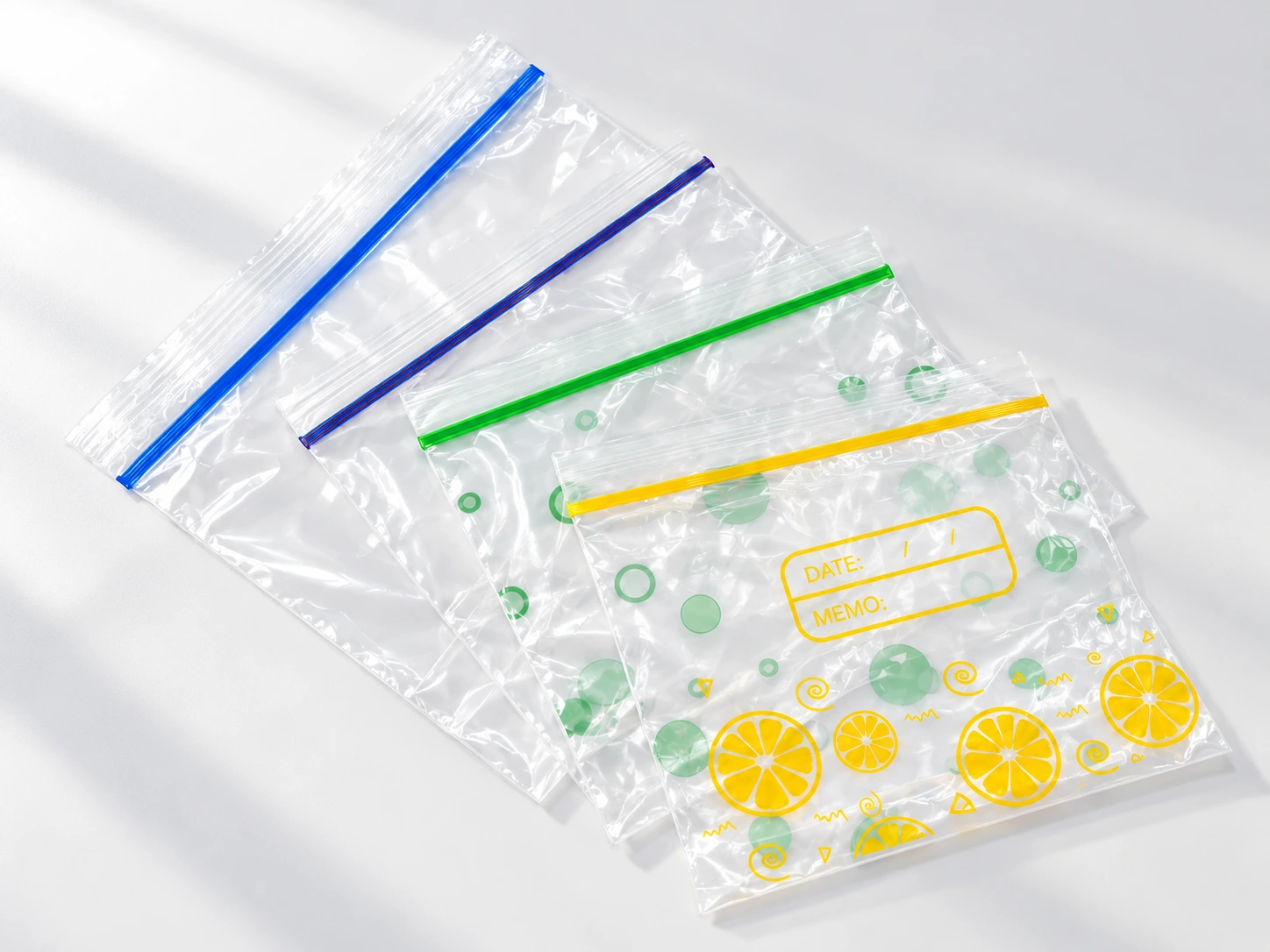
Single press-to-close zipper
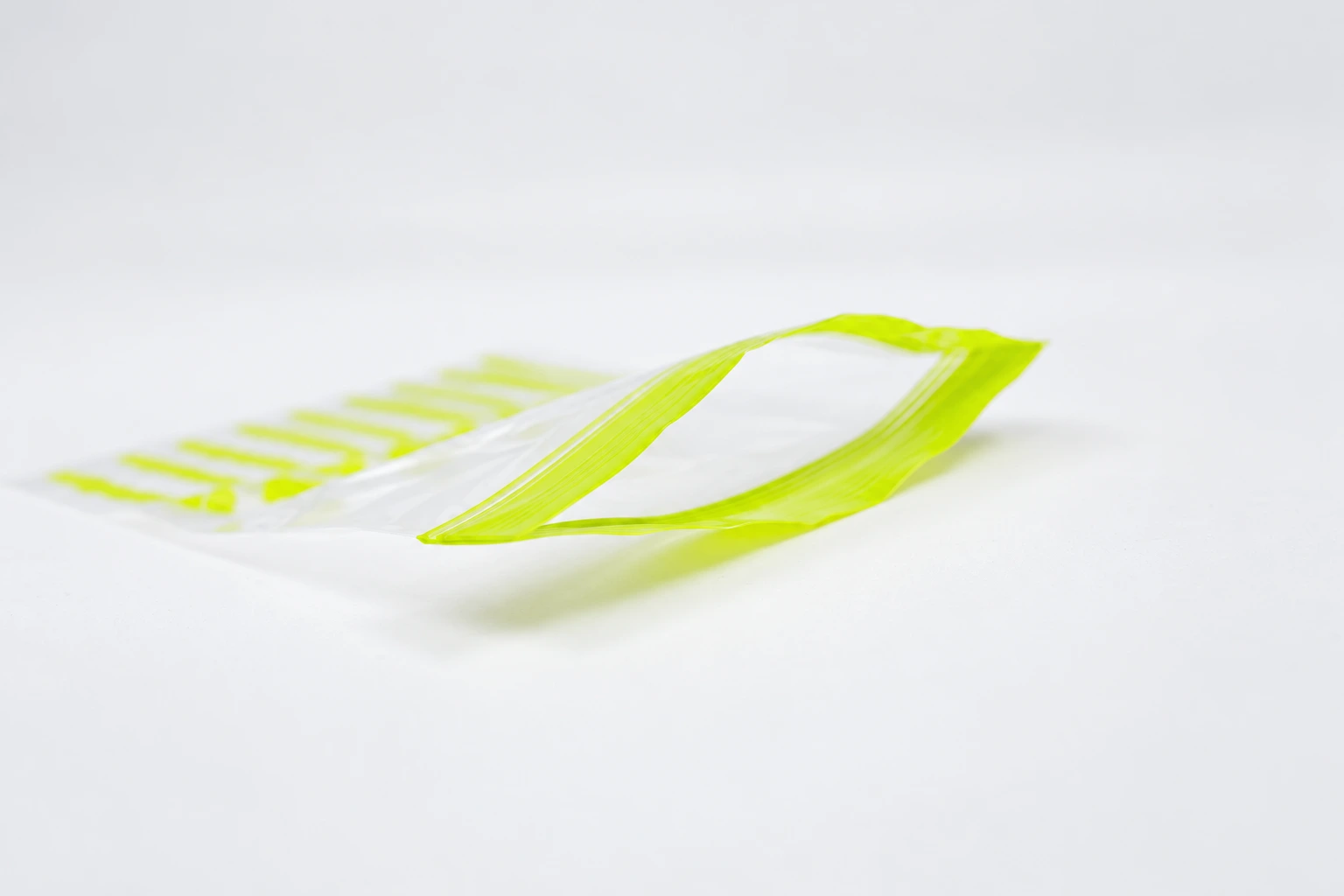
A single zipper bag uses one pair of interlocking profiles to create a resealable, press-to-close opening.
It is a direct, adaptable format for industrial parts, commercial packing, food-processing applications and general organization. It can be clear, coloured or printed and supplied in the packing format agreed for the project.
“Single” does not mean low quality. Suitability depends on the complete construction: zipper profile, film, seals, dimensions and intended handling.
What is a double zipper bag?
Double zipper construction
A double zipper bag uses two parallel press-to-close profiles.
The second track creates a different closing action and gives the user another point of closure engagement. Double zipper formats are often considered for household food storage and private-label consumer ranges where repeated opening and closing are part of the product experience.
Two tracks do not make a bag suitable for every product or condition. The body film, dimensions, seals and packing format still need to match the application.
The main differences
Decision area
Single zipper
Double zipper
Closure structure
One press-to-close track
Two parallel press-to-close tracks
User interaction
Direct opening and closing action
A different reclosure feel with two engagement points
Typical starting context
Industrial, commercial and general packing
Household storage and consumer retail ranges
Packing format
Bulk, inner packed or retail packed
Frequently developed with retail packs, but not limited to them
Review focus
Profile, film, size, seals and packing
Both tracks, lip design, film, size, seals and presentation
These are starting points, not fixed rules. The same product category may use different closures in different markets or filling systems.
Choose according to the application
Start with the bag’s job.
For industrial components or commercial supplies, the buyer may prioritize filling, identification, repeated access and bulk handling. A Single Zipper Bag may provide the required format without adding a second track.
For a household storage or branded consumer range, the opening and closing experience may carry more weight. A Double Zipper Bag may better support that product direction.
Do not decide from the application name alone. Also consider the packed item, expected fill, bag dimensions, storage conditions and handling method.
Consider the person using the bag
Ask:
• Is the bag closed once in production or reopened frequently?
• Will trained staff or general consumers use it?
• Is fast filling more important than retail presentation?
• Is a noticeable closing action important?
• Is the opening lip easy to grip at the intended size?
• Will gloves, moisture or cold conditions affect handling?
A use trial with a representative sample can reveal issues that are not obvious from a drawing.
Review the complete bag
A second zipper track cannot correct unsuitable film, weak seals, incorrect dimensions or poor closure alignment.
Review the full construction:
• finished width and height;
• opening lip;
• flat or gusseted bottom;
• film and thickness basis;
• zipper alignment and opening action;
• bottom and side seals;
• printing position; and
• bulk, inner-pack or retail-pack requirements.
If the project has a special use, printing or packing arrangement, inspection points should follow the confirmed product rather than a generic checklist.
Do not assume double always means “better”
Single and double describe closure structures, not universal quality grades.
A well-specified single zipper bag may be the more appropriate choice for a straightforward commercial application. A double zipper bag may suit a consumer product where closure experience is part of the offer. Either format can be poorly matched if the remaining specification is incomplete.
Cost should also be compared using the complete construction and packing requirement, not an assumption about zipper count alone.
When should you review both?
Comparing representative samples can help when:
• you are replacing a bag without the original specification;
• users disagree about opening and closing preference;
• you are developing a new private-label range;
• the bag will be reopened frequently; or
• production handling and retail presentation are both important.
Use samples with similar dimensions and film construction. Testing two unrelated bags will not isolate the effect of the zipper style.
What to share for a recommendation
Provide the packed item, intended user, opening frequency, known dimensions, estimated quantity, printing needs, packing preference and any current sample or photo.
The right choice is the closure whose complete bag specification works for the actual project.
Not sure which closure fits your project?
Share the packed item, intended use and a reference photo. HAIKE can help compare suitable starting options.
Request a Quote
Related pages
• Industrial & Manufacturing
• Household Food Storage & Freezer
• Zipper Bag Buying Guide
CONTINUE READING
What to Prepare for Custom Printed Bags
Bulk Packing vs. Retail Packs for Zipper Bags

Good packaging.
Starts with a conversation.
© Jiangmen Haike Packaging Co., Ltd.

Single Zipper vs. Double Zipper Bags: How to Choose
Single and double zipper bags create different closure structures and user experiences. Compare them by application, filling method and handling—not by track count alone.
The visible difference is simple: a single zipper bag has one press-to-close track, while a double zipper bag has two parallel tracks.
The purchasing decision depends on more than that number. Consider who will use the bag, what it will hold, how it will be filled, how often it will be reopened and how the finished product will be presented.
In this article
• What is a single zipper bag?
• What is a double zipper bag?
• The main differences
• Choose according to the application
• Consider the person using the bag
• Review the complete bag
• Do not assume double always means “better”
• When should you review both?
• What to share for a recommendation
• Not sure which closure fits your project?
Compare the closure profile together with the bag construction and intended use.
What is a single zipper bag?
Single press-to-close zipper
A single zipper bag uses one pair of interlocking profiles to create a resealable, press-to-close opening.
It is a direct, adaptable format for industrial parts, commercial packing, food-processing applications and general organization. It can be clear, coloured or printed and supplied in the packing format agreed for the project.
“Single” does not mean low quality. Suitability depends on the complete construction: zipper profile, film, seals, dimensions and intended handling.
What is a double zipper bag?
Double zipper construction
A double zipper bag uses two parallel press-to-close profiles.
The second track creates a different closing action and gives the user another point of closure engagement. Double zipper formats are often considered for household food storage and private-label consumer ranges where repeated opening and closing are part of the product experience.
Two tracks do not make a bag suitable for every product or condition. The body film, dimensions, seals and packing format still need to match the application.
The main differences
Decision area
Single zipper
Double zipper
Closure structure
One press-to-close track
Two parallel press-to-close tracks
User interaction
Direct opening and closing action
A different reclosure feel with two engagement points
Typical starting context
Industrial, commercial and general packing
Household storage and consumer retail ranges
Packing format
Bulk, inner packed or retail packed
Frequently developed with retail packs, but not limited to them
Review focus
Profile, film, size, seals and packing
Both tracks, lip design, film, size, seals and presentation
These are starting points, not fixed rules. The same product category may use different closures in different markets or filling systems.
Choose according to the application
Start with the bag’s job.
For industrial components or commercial supplies, the buyer may prioritize filling, identification, repeated access and bulk handling. A Single Zipper Bag may provide the required format without adding a second track.
For a household storage or branded consumer range, the opening and closing experience may carry more weight. A Double Zipper Bag may better support that product direction.
Do not decide from the application name alone. Also consider the packed item, expected fill, bag dimensions, storage conditions and handling method.
Consider the person using the bag
Ask:
• Is the bag closed once in production or reopened frequently?
• Will trained staff or general consumers use it?
• Is fast filling more important than retail presentation?
• Is a noticeable closing action important?
• Is the opening lip easy to grip at the intended size?
• Will gloves, moisture or cold conditions affect handling?
A use trial with a representative sample can reveal issues that are not obvious from a drawing.
Review the complete bag
A second zipper track cannot correct unsuitable film, weak seals, incorrect dimensions or poor closure alignment.
Review the full construction:
• finished width and height;
• opening lip;
• flat or gusseted bottom;
• film and thickness basis;
• zipper alignment and opening action;
• bottom and side seals;
• printing position; and
• bulk, inner-pack or retail-pack requirements.
If the project has a special use, printing or packing arrangement, inspection points should follow the confirmed product rather than a generic checklist.
Do not assume double always means “better”
Single and double describe closure structures, not universal quality grades.
A well-specified single zipper bag may be the more appropriate choice for a straightforward commercial application. A double zipper bag may suit a consumer product where closure experience is part of the offer. Either format can be poorly matched if the remaining specification is incomplete.
Cost should also be compared using the complete construction and packing requirement, not an assumption about zipper count alone.
When should you review both?
Comparing representative samples can help when:
• you are replacing a bag without the original specification;
• users disagree about opening and closing preference;
• you are developing a new private-label range;
• the bag will be reopened frequently; or
• production handling and retail presentation are both important.
Use samples with similar dimensions and film construction. Testing two unrelated bags will not isolate the effect of the zipper style.
What to share for a recommendation
Provide the packed item, intended user, opening frequency, known dimensions, estimated quantity, printing needs, packing preference and any current sample or photo.
The right choice is the closure whose complete bag specification works for the actual project.
Not sure which closure fits your project?
Share the packed item, intended use and a reference photo. HAIKE can help compare suitable starting options.
Request a Quote
Related pages
• Industrial & Manufacturing
• Household Food Storage & Freezer
• Zipper Bag Buying Guide
CONTINUE READING
What to Prepare for Custom Printed Bags
Bulk Packing vs. Retail Packs for Zipper Bags
Good packaging.
Starts with a conversation.
© Jiangmen Haike Packaging Co., Ltd.