


How to Choose the Right Bag Thickness
HOME / ARTICLE
Bag thickness should match what goes inside the bag and what happens after filling. Compare the main factors without relying on one standard number.
The right thickness is not simply “thin,” “standard” or “heavy duty.” It depends on what the bag holds, how it is filled, what happens during transport and how the user handles it.
A higher number is not automatically better. More thickness cannot correct an unsuitable closure, weak seal design or incorrect bag size. Treat thickness as one part of the complete bag construction.
In this article
• Start with the packed product
• Follow the full handling journey
• Consider thickness with the whole bag structure
• Make the unit and measurement basis clear
• Do not copy a number without context
• Validate with a representative sample
• What to share for a thickness recommendation
• Need help confirming a starting specification?
Confirm how film thickness is measured and recorded for the project.
Start with the packed product
Before discussing a number, describe the contents:
• What will the bag contain?
• What is the approximate fill weight?
• Is the product soft, smooth, dense, irregular or sharp-edged?
• Will it be loose, stacked or compressed?
• Can the contents rub against the film?
• Will the bag be opened repeatedly?
• Will it be used at room temperature, in cold storage or in another defined condition?
Two bags with similar dimensions can need different starting constructions because the contents place different stress on the film, zipper and seals.
Follow the full handling journey

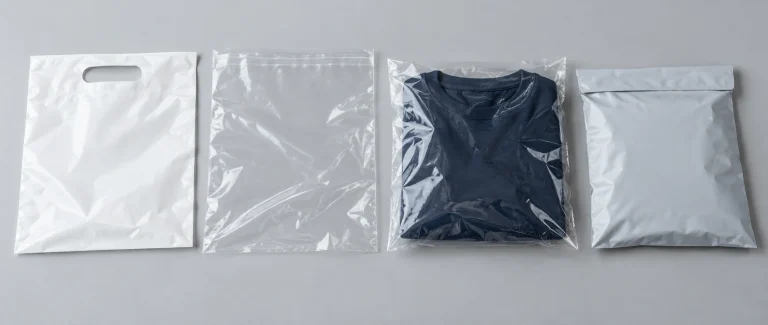
Packed contents and handling conditions
The empty bag is only the starting point. Consider each stage:
• Filling: Is it filled by hand or used with packing equipment?
• Closing: Is it closed once or reopened many times?
• Internal handling: Will filled bags move between workstations or storage bins?
• Transport: Could they be compressed, vibrated or rubbed inside a carton?
• Final use: Does the customer need easy handling, a particular feel or retail-ready presentation?
These conditions determine what should be sampled and checked. An automated packing line may place more emphasis on opening consistency and film stiffness. An industrial parts bag may require closer attention to edge contact and transport abrasion.
Consider thickness with the whole bag structure
Performance can also be affected by:
• PE material formulation;
• bag width and height;
• zipper profile;
• single or double zipper construction;
• slider components;
• bottom or side gussets;
• bottom and side seals;
• lip design;
• printing coverage; and
• packing format.
Two bags with the same nominal thickness may not feel or perform the same when their material, dimensions or structure differ.
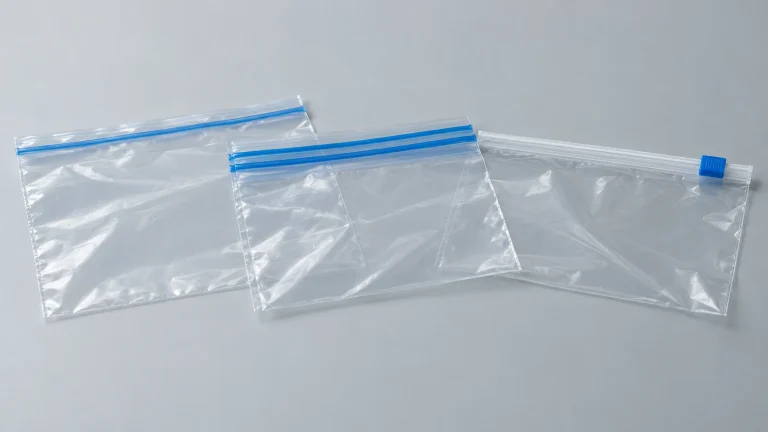
A thicker film also does not turn one closure type into another. Review the Single Zipper Bags , Double Zipper Bags and Slider Bags options separately.
Make the unit and measurement basis clear
Thickness may be written in microns, mils or gauge. Include the unit on every drawing, quotation and approved specification.
One mil equals 25.4 microns. Gauge notation can be interpreted differently across markets, so include a micron or mil equivalent when gauge is used.
Also confirm whether the value means:
• one film wall; or
• the combined thickness through both walls of a flat bag.
A number without its measurement basis can leave two parties approving different constructions. The agreed specification should state the nominal thickness and how it will be measured; any applicable tolerance must be confirmed for the actual project.
Do not copy a number without context
An existing bag can be a useful reference, but its thickness should not automatically become the new specification.
The sample may use a different material formulation, closure, seal geometry or measurement convention. Instead of asking only to copy the number, explain what you value about the sample: flexibility, opening feel, filling performance, appearance or another feature.
That information gives the supplier a clearer target.
Validate with a representative sample

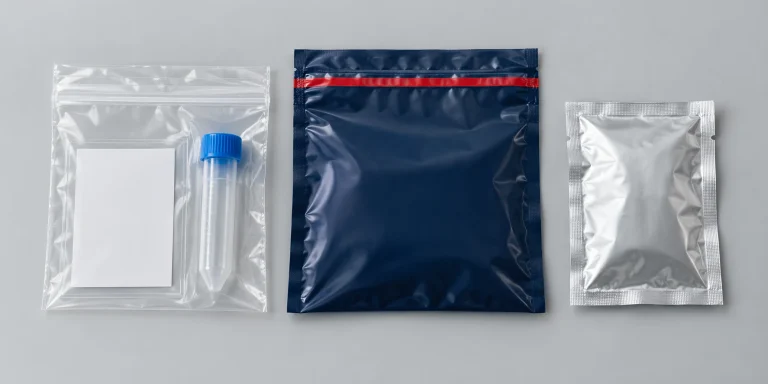
Review the proposed film and construction
For a new or unusual use, sampling is the best way to check the proposed construction. Whenever possible, test with the actual product and intended process:
• fill to the expected quantity;
• check contact with edges and corners;
• close and reopen the zipper;
• carry and stack filled bags;
• place them in the intended inner pack or carton; and
• review them under the expected storage and handling conditions.
The inspection focus should follow the product and its risks rather than one fixed checklist for every bag.
What to share for a thickness recommendation
Provide as much as you know:
• packed product and approximate fill weight;
• bag style and closure;
• dimensions, lip and gusset;
• current thickness and unit, if known;
• filling and handling method;
• storage condition;
• printing and packing requirements;
• estimated quantity; and
• existing sample, drawing or photo.
You do not need every detail finalized. Clear information about the product and handling process provides a better starting point than selecting a number in isolation.
Need help confirming a starting specification?
Tell us what you are packing, how the bag will be handled and what information you already have. HAIKE can review the starting requirements for the next sampling or quotation step.
Discuss Your Bag Requirements
Related pages
• Industrial & Manufacturing
• How to Measure a Zipper Bag
• Zipper Bag Buying Guide
CONTINUE READING
Bulk Packing vs. Retail Packs for Zipper Bags
Single Zipper vs. Double Zipper Bags: How to Choose

Good packaging.
Starts with a conversation.
© Jiangmen Haike Packaging Co., Ltd.

How to Choose the Right Bag Thickness
Bag thickness should match what goes inside the bag and what happens after filling. Compare the main factors without relying on one standard number.
The right thickness is not simply “thin,” “standard” or “heavy duty.” It depends on what the bag holds, how it is filled, what happens during transport and how the user handles it.
A higher number is not automatically better. More thickness cannot correct an unsuitable closure, weak seal design or incorrect bag size. Treat thickness as one part of the complete bag construction.
In this article
• Start with the packed product
• Follow the full handling journey
• Consider thickness with the whole bag structure
• Make the unit and measurement basis clear
• Do not copy a number without context
• Validate with a representative sample
• What to share for a thickness recommendation
• Need help confirming a starting specification?
Confirm how film thickness is measured and recorded for the project.
Start with the packed product
Before discussing a number, describe the contents:
• What will the bag contain?
• What is the approximate fill weight?
• Is the product soft, smooth, dense, irregular or sharp-edged?
• Will it be loose, stacked or compressed?
• Can the contents rub against the film?
• Will the bag be opened repeatedly?
• Will it be used at room temperature, in cold storage or in another defined condition?
Two bags with similar dimensions can need different starting constructions because the contents place different stress on the film, zipper and seals.
Follow the full handling journey
Packed contents and handling conditions
The empty bag is only the starting point. Consider each stage:
• Filling: Is it filled by hand or used with packing equipment?
• Closing: Is it closed once or reopened many times?
• Internal handling: Will filled bags move between workstations or storage bins?
• Transport: Could they be compressed, vibrated or rubbed inside a carton?
• Final use: Does the customer need easy handling, a particular feel or retail-ready presentation?
These conditions determine what should be sampled and checked. An automated packing line may place more emphasis on opening consistency and film stiffness. An industrial parts bag may require closer attention to edge contact and transport abrasion.
Consider thickness with the whole bag structure
Performance can also be affected by:
• PE material formulation;
• bag width and height;
• zipper profile;
• single or double zipper construction;
• slider components;
• bottom or side gussets;
• bottom and side seals;
• lip design;
• printing coverage; and
• packing format.
Two bags with the same nominal thickness may not feel or perform the same when their material, dimensions or structure differ.
A thicker film also does not turn one closure type into another. Review the Single Zipper Bags , Double Zipper Bags and Slider Bags options separately.
Make the unit and measurement basis clear
Thickness may be written in microns, mils or gauge. Include the unit on every drawing, quotation and approved specification.
One mil equals 25.4 microns. Gauge notation can be interpreted differently across markets, so include a micron or mil equivalent when gauge is used.
Also confirm whether the value means:
• one film wall; or
• the combined thickness through both walls of a flat bag.
A number without its measurement basis can leave two parties approving different constructions. The agreed specification should state the nominal thickness and how it will be measured; any applicable tolerance must be confirmed for the actual project.
Do not copy a number without context
An existing bag can be a useful reference, but its thickness should not automatically become the new specification.
The sample may use a different material formulation, closure, seal geometry or measurement convention. Instead of asking only to copy the number, explain what you value about the sample: flexibility, opening feel, filling performance, appearance or another feature.
That information gives the supplier a clearer target.
Validate with a representative sample
Review the proposed film and construction
For a new or unusual use, sampling is the best way to check the proposed construction. Whenever possible, test with the actual product and intended process:
• fill to the expected quantity;
• check contact with edges and corners;
• close and reopen the zipper;
• carry and stack filled bags;
• place them in the intended inner pack or carton; and
• review them under the expected storage and handling conditions.
The inspection focus should follow the product and its risks rather than one fixed checklist for every bag.
What to share for a thickness recommendation
Provide as much as you know:
• packed product and approximate fill weight;
• bag style and closure;
• dimensions, lip and gusset;
• current thickness and unit, if known;
• filling and handling method;
• storage condition;
• printing and packing requirements;
• estimated quantity; and
• existing sample, drawing or photo.
You do not need every detail finalized. Clear information about the product and handling process provides a better starting point than selecting a number in isolation.
Need help confirming a starting specification?
Tell us what you are packing, how the bag will be handled and what information you already have. HAIKE can review the starting requirements for the next sampling or quotation step.
Discuss Your Bag Requirements
Related pages
• Industrial & Manufacturing
• How to Measure a Zipper Bag
• Zipper Bag Buying Guide
CONTINUE READING
Bulk Packing vs. Retail Packs for Zipper Bags
Single Zipper vs. Double Zipper Bags: How to Choose
Good packaging.
Starts with a conversation.
© Jiangmen Haike Packaging Co., Ltd.