

How to Measure a Zipper Bag
HOME / ARTICLE
A clear bag measurement includes more than width and height. Record the body, lip, gusset and thickness so your sample, drawing and quotation refer to the same bag.
A bag described only as “200 × 300 mm” can still be interpreted in different ways.
Does the height include the lip above the zipper? Is there a bottom gusset? Is thickness stated per side or through both walls? These details affect usable space, material use, packing and quotation accuracy.
The safest approach is to label each measurement and show it on a simple photo or drawing.
In this article
• Start with the finished bag
• Record these five details
• A simple way to document a sample
• Common measurement mistakes
• What to send with your inquiry
• Have a sample or marked-up photo?
Measure the empty, finished bag while it is lying flat.
Start with the finished bag
If you have a sample, empty it and place it flat on a level surface. Smooth the film gently without stretching it.
Measure the finished bag rather than estimating the bag size from the product inside. Product dimensions are still useful, but they do not show the clearance needed for filling, closing and handling.
If you do not have a sample, send the product dimensions, intended fill quantity and a photo. Those details provide a starting point for discussing a suitable bag size.
Record these five details
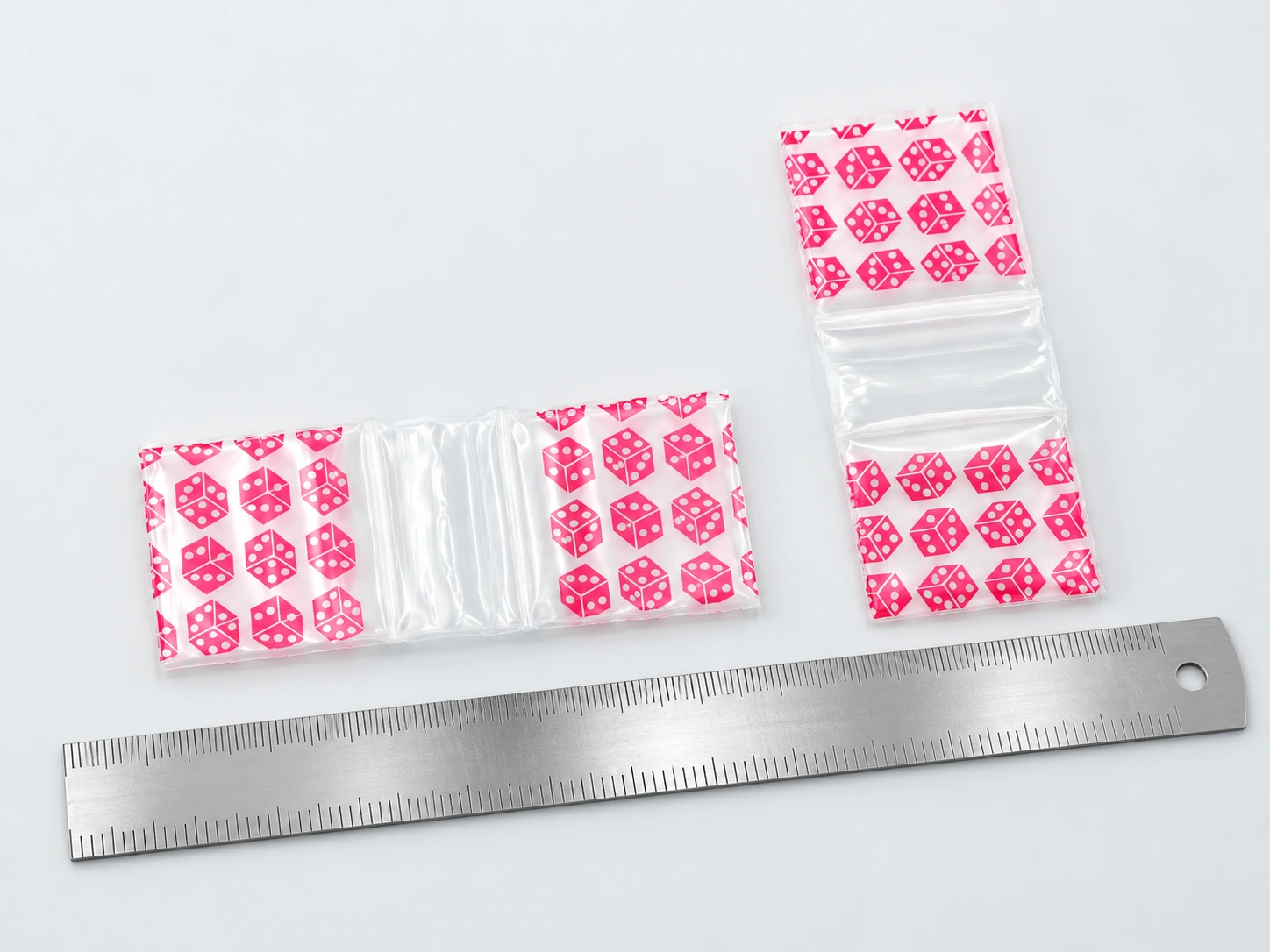
Dimensions / Record the finished bag clearly
Width
Measure horizontally across the flat bag body from one outside edge to the other.
Label the figure as width . Do not rely on the order of two numbers alone, because different documents may use different conventions.
Height below the zipper
For HAIKE zipper bag inquiries, record the body height from below the zipper area to the bottom of the finished bag.
This identifies the main packing space below the closure. For a double zipper bag, mark the zipper line used as the reference point. If an existing specification uses overall height instead, state that clearly.
Lip height
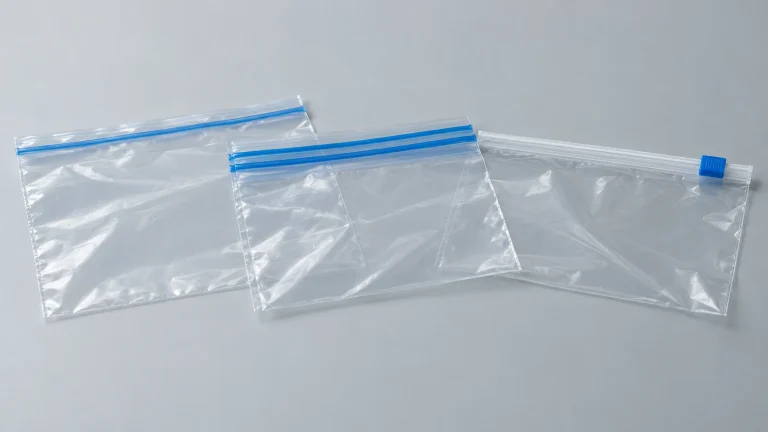
The lip is the film above the zipper that the user holds when opening the bag. Measure it separately from the body.
If the front and back lips are different, record both. Also identify any header, hang hole or special feature above the closure.
Gusset
A bottom or side gusset adds expandable space. State:
• where the gusset is located;
• the dimension shown on the flat sample or drawing; and
• whether the number describes the folded measurement or intended opened depth.
Gusset notation can vary. A labelled photo is safer than a number without context.
Film thickness
State thickness separately from the bag dimensions and always include the unit.
For a HAIKE PE bag inquiry, identify the body film thickness per side . If your existing specification uses total thickness through both walls, label it that way. If the thickness is unknown, say so and provide a sample rather than estimating by touch.
For help deciding what thickness may suit the application, see How to Choose the Right Bag Thickness .
A simple way to document a sample
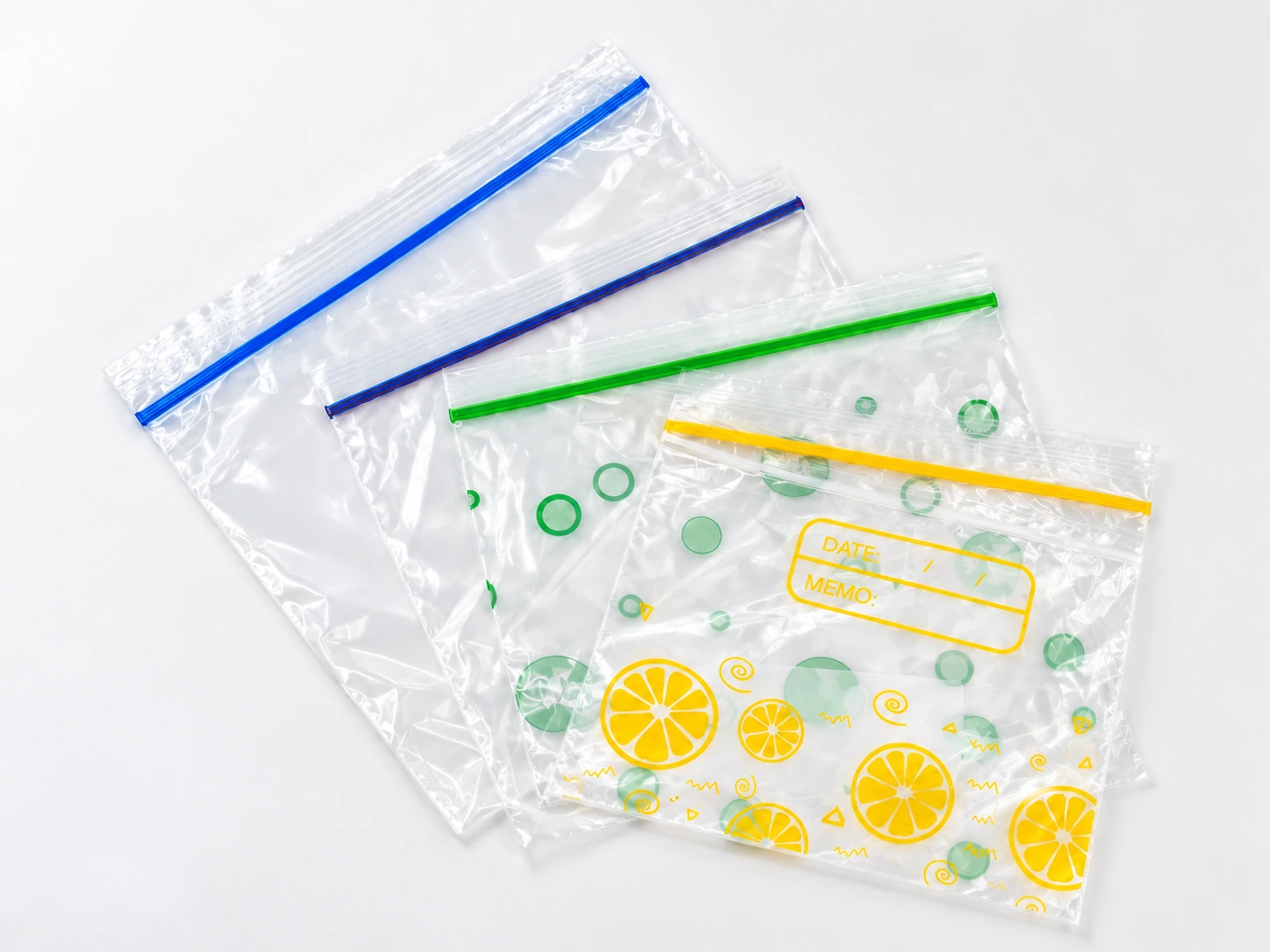
Reference samples / Compare the bag itself
• Flatten the empty bag without stretching it.
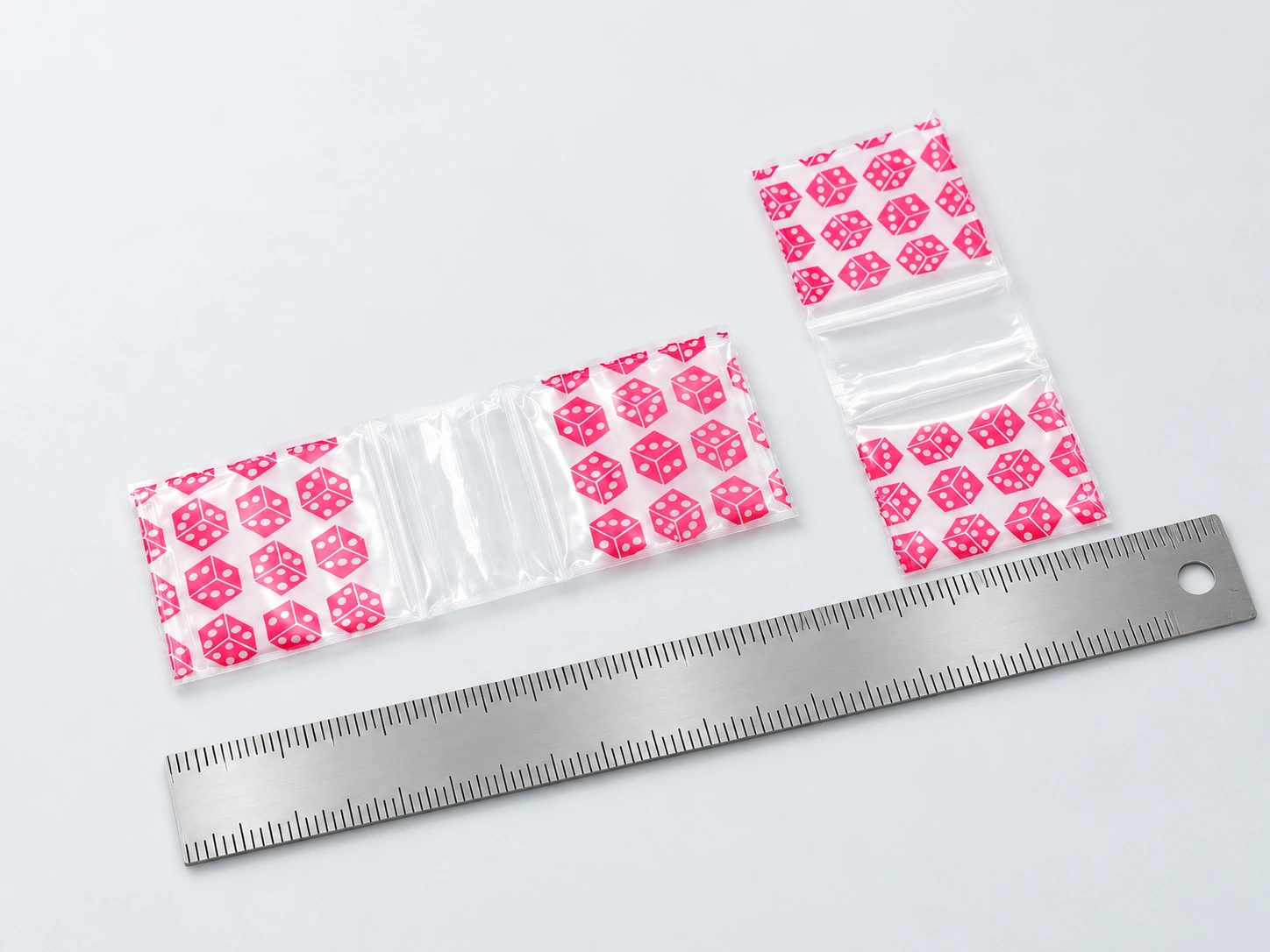
• Place a ruler beside it and take one straight, full-bag photo.
• Mark the finished width and height below the zipper.
• Add the front and back lip measurements if they differ.
• Photograph and label any gusset separately.
• Add a close-up of the closure and any printing or special feature.
• Record thickness and its unit if known.
For slider bags, also photograph the slider, end stops and top construction. A marked-up photo is usually clearer than an unlabelled spreadsheet.
Common measurement mistakes
Giving only “width × height” Two figures do not explain whether the lip, closure or gusset is included. Add labels and a small drawing.
Measuring only the packed product Product dimensions help with capacity planning, but they are not a finished bag specification. Provide both when possible.
Mixing internal and external dimensions Usable internal space and finished external dimensions are not always the same. State which one you measured.
Omitting the thickness basis A thickness number is incomplete if it is unclear whether it refers to one film wall or both walls together.
Assuming the sample is the final specification A physical sample is useful, but production variation, storage and handling may affect it. Confirm the final drawing or written specification before production.
What to send with your inquiry
Include as much of the following as you know:
• intended use or packed item;
• bag style or sample photos;
• width and height below the zipper;
• lip and gusset dimensions, if applicable;
• film thickness and unit, if known;
• estimated quantity;
• printing requirements; and
• bulk, inner-pack or retail-pack preference.
You do not need every answer before making contact. Mark missing information as to be confirmed and send the reference material you already have.
Before production, the sample, drawing, quotation and approved requirements should all describe the same construction.
Have a sample or marked-up photo?
Send it with the intended use and estimated quantity. HAIKE can help identify the details that still need confirmation.
Request a Quote
Related pages
• Double Zipper Bags
• Household Food Storage & Freezer
• Zipper Bag Buying Guide
CONTINUE READING
Single Zipper vs. Double Zipper Bags: How to Choose
How to Choose the Right Bag Thickness

Good packaging.
Starts with a conversation.
© Jiangmen Haike Packaging Co., Ltd.
How to Measure a Zipper Bag
A clear bag measurement includes more than width and height. Record the body, lip, gusset and thickness so your sample, drawing and quotation refer to the same bag.
A bag described only as “200 × 300 mm” can still be interpreted in different ways.
Does the height include the lip above the zipper? Is there a bottom gusset? Is thickness stated per side or through both walls? These details affect usable space, material use, packing and quotation accuracy.
The safest approach is to label each measurement and show it on a simple photo or drawing.
In this article
• Start with the finished bag
• Record these five details
• A simple way to document a sample
• Common measurement mistakes
• What to send with your inquiry
• Have a sample or marked-up photo?
Measure the empty, finished bag while it is lying flat.
Start with the finished bag
If you have a sample, empty it and place it flat on a level surface. Smooth the film gently without stretching it.
Measure the finished bag rather than estimating the bag size from the product inside. Product dimensions are still useful, but they do not show the clearance needed for filling, closing and handling.
If you do not have a sample, send the product dimensions, intended fill quantity and a photo. Those details provide a starting point for discussing a suitable bag size.
Record these five details
Dimensions / Record the finished bag clearly
Width
Measure horizontally across the flat bag body from one outside edge to the other.
Label the figure as width . Do not rely on the order of two numbers alone, because different documents may use different conventions.
Height below the zipper
For HAIKE zipper bag inquiries, record the body height from below the zipper area to the bottom of the finished bag.
This identifies the main packing space below the closure. For a double zipper bag, mark the zipper line used as the reference point. If an existing specification uses overall height instead, state that clearly.
Lip height
The lip is the film above the zipper that the user holds when opening the bag. Measure it separately from the body.
If the front and back lips are different, record both. Also identify any header, hang hole or special feature above the closure.
Gusset
A bottom or side gusset adds expandable space. State:
• where the gusset is located;
• the dimension shown on the flat sample or drawing; and
• whether the number describes the folded measurement or intended opened depth.
Gusset notation can vary. A labelled photo is safer than a number without context.
Film thickness
State thickness separately from the bag dimensions and always include the unit.
For a HAIKE PE bag inquiry, identify the body film thickness per side . If your existing specification uses total thickness through both walls, label it that way. If the thickness is unknown, say so and provide a sample rather than estimating by touch.
For help deciding what thickness may suit the application, see How to Choose the Right Bag Thickness .
A simple way to document a sample
Reference samples / Compare the bag itself
• Flatten the empty bag without stretching it.
• Place a ruler beside it and take one straight, full-bag photo.
• Mark the finished width and height below the zipper.
• Add the front and back lip measurements if they differ.
• Photograph and label any gusset separately.
• Add a close-up of the closure and any printing or special feature.
• Record thickness and its unit if known.
For slider bags, also photograph the slider, end stops and top construction. A marked-up photo is usually clearer than an unlabelled spreadsheet.
Common measurement mistakes
Giving only “width × height” Two figures do not explain whether the lip, closure or gusset is included. Add labels and a small drawing.
Measuring only the packed product Product dimensions help with capacity planning, but they are not a finished bag specification. Provide both when possible.
Mixing internal and external dimensions Usable internal space and finished external dimensions are not always the same. State which one you measured.
Omitting the thickness basis A thickness number is incomplete if it is unclear whether it refers to one film wall or both walls together.
Assuming the sample is the final specification A physical sample is useful, but production variation, storage and handling may affect it. Confirm the final drawing or written specification before production.
What to send with your inquiry
Include as much of the following as you know:
• intended use or packed item;
• bag style or sample photos;
• width and height below the zipper;
• lip and gusset dimensions, if applicable;
• film thickness and unit, if known;
• estimated quantity;
• printing requirements; and
• bulk, inner-pack or retail-pack preference.
You do not need every answer before making contact. Mark missing information as to be confirmed and send the reference material you already have.
Before production, the sample, drawing, quotation and approved requirements should all describe the same construction.
Have a sample or marked-up photo?
Send it with the intended use and estimated quantity. HAIKE can help identify the details that still need confirmation.
Request a Quote
Related pages
• Double Zipper Bags
• Household Food Storage & Freezer
• Zipper Bag Buying Guide
CONTINUE READING
Single Zipper vs. Double Zipper Bags: How to Choose
How to Choose the Right Bag Thickness
Good packaging.
Starts with a conversation.
© Jiangmen Haike Packaging Co., Ltd.