What to Prepare for Custom Printed Bags
HOME / ARTICLE
A logo file alone does not define a printed bag. Organize the product, artwork, print and packing details a manufacturer needs to review the project clearly.
Custom printing starts with more than a logo file. The bag specification, printed content and final packing format all affect how the project should be reviewed.
You do not need every detail before making contact. Separating confirmed information from open questions helps the manufacturer understand the goal and identify what still needs to be decided.
In this article
• Describe the bag first
• State how the bag is measured
• List everything that must be printed
• Send the best artwork available
• Separate bag printing from retail packaging
• Share the commercial starting point
• Agree on the approval references
• A practical inquiry checklist
• Have artwork—or only a starting idea?
Keep the artwork, colour references and bag specification together.
Describe the bag first
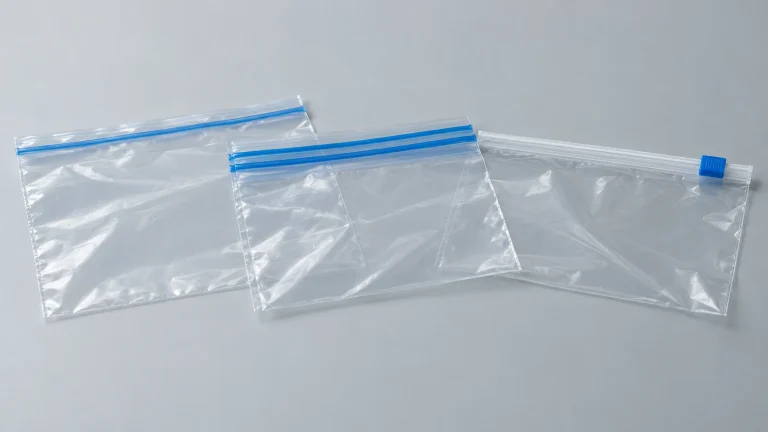
Start with what the bag needs to do:
• What will be packed inside?
• Which bag style or closure do you prefer?
• Is it for industrial use, food processing, retail or another application?
• Do you have an existing bag, drawing or reference photo?
• Are there special filling, opening or handling requirements?
Visually similar bags may need different sizes, structures or packing methods. If you are still comparing formats, start with the Zipper Bag Buying Guide or review the product range .
State how the bag is measured
Provide width, height and thickness if known. Identify features that change the finished construction, including:
• opening lip;
• zipper position;
• bottom or side gusset;
• handle or hanging hole;
• write-on or identification area; and
• special opening direction.
Do not send two dimensions without explaining what they represent. For a zipper bag, state whether height is measured below the zipper or includes the lip.
If you are reproducing an existing product, a physical sample or dimensioned drawing is clearer than a photo alone. See How to Measure a Zipper Bag for a simple checklist.
List everything that must be printed
“Logo printing” may not describe the full requirement. Note all visible elements, such as:
• brand and product name;
• instructions or warning text;
• symbols and icons;
• barcode or QR code;
• identification fields; and
• lot, date or variable-information area.
State whether printing appears on one side or both sides and mark the approximate position. If brand colors matter, provide the reference system or an approved physical reference when available.
Final color, coverage and layout must be reviewed for the actual film, bag and print method rather than assumed from a screen image.
Send the best artwork available
Editable vector artwork is normally the most useful starting point. Where available, include:
• the original artwork rather than a screenshot;
• fonts converted to outlines or supplied separately;
• linked images at suitable resolution;
• a marked layout or dieline;
• brand color references; and
• the latest approved text and barcode data.
A PDF is helpful for viewing but may not contain editable elements. JPEG and PNG files are useful as visual references but may not be suitable as final production artwork.
If the design is unfinished, label it as a concept. The required production file and proof format can then be confirmed during the project review.
Separate bag printing from retail packaging
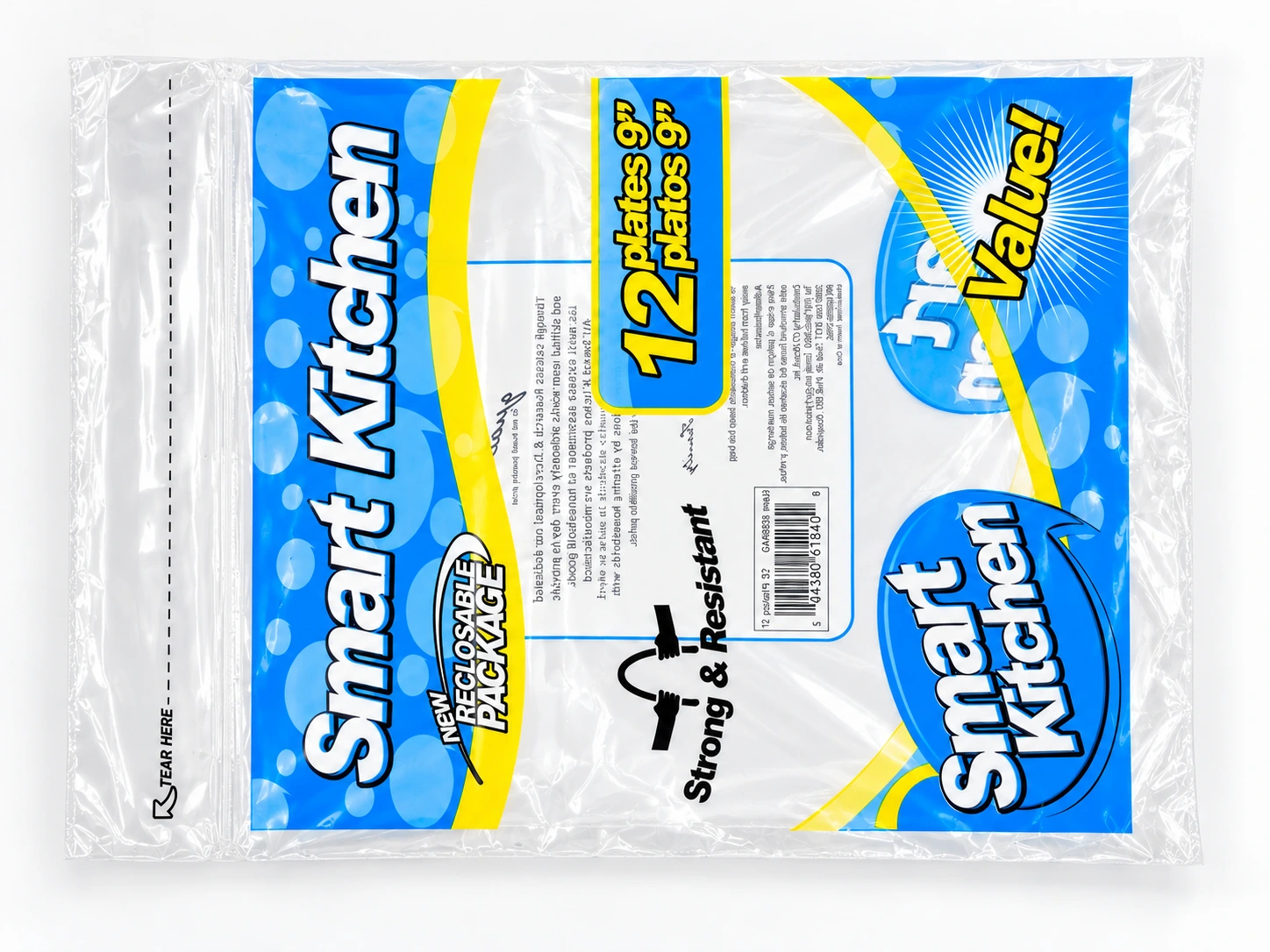
Bag artwork and printing
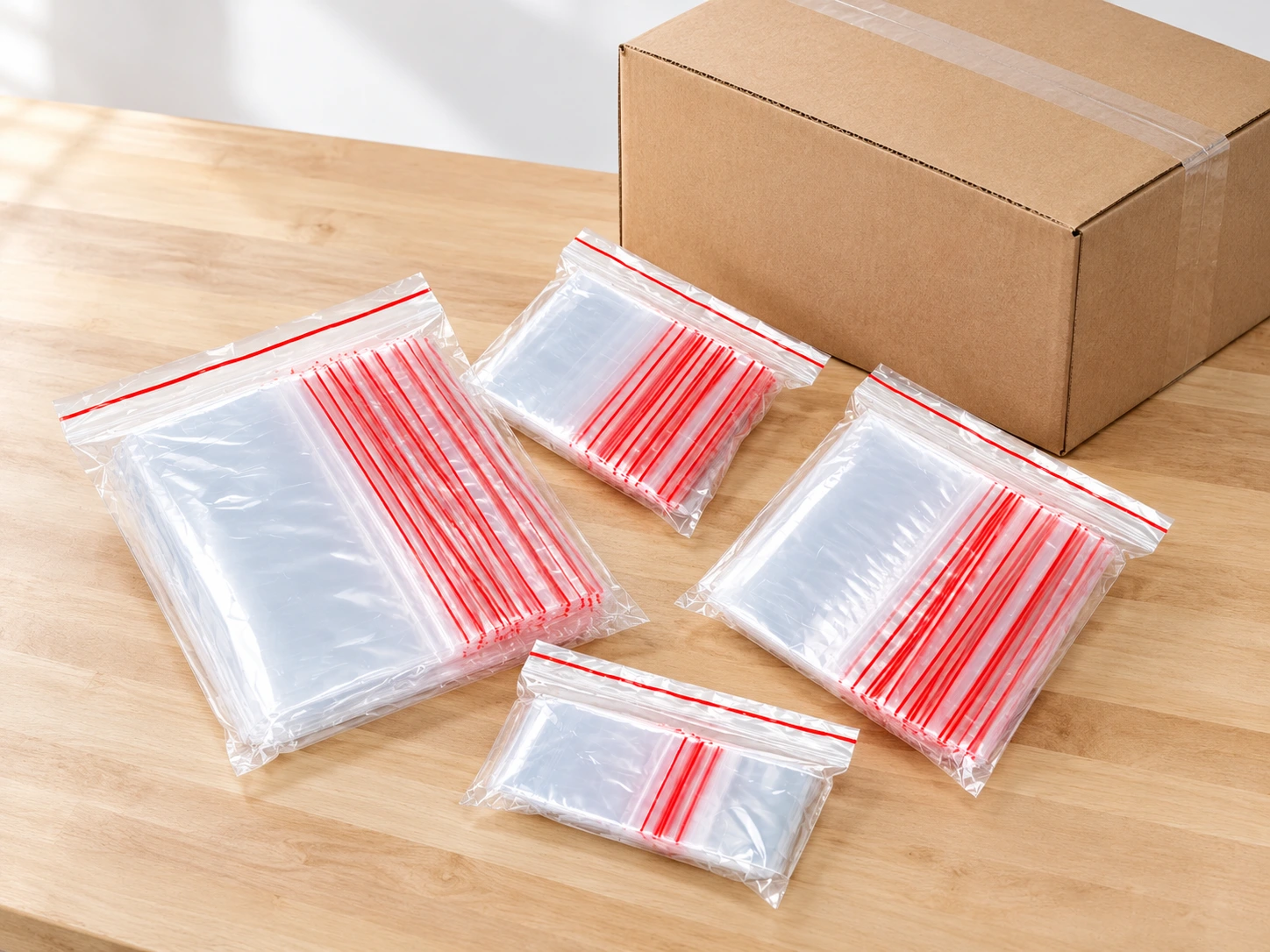
Retail pack and presentation
The printed bag and its outer packaging are different parts of the project.
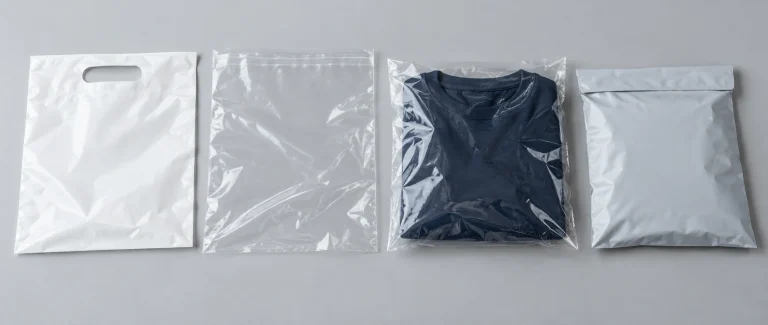
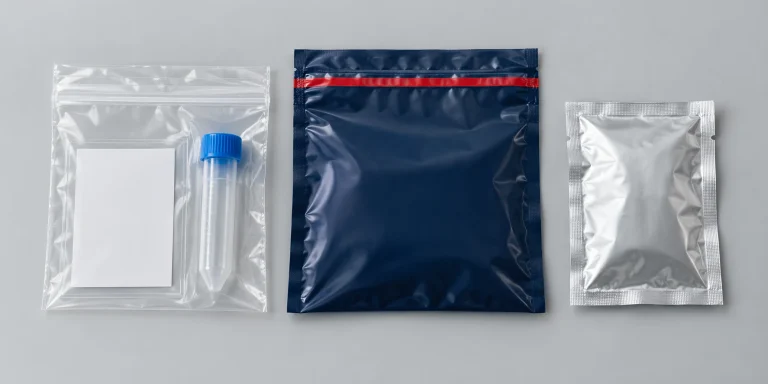
A bag may be supplied in bulk, grouped into inner packs or presented as a branded retail unit. Retail packaging can add pack-count information, barcodes, language versions, labels, carton marks and separate artwork.
Indicate which route is closest to your requirement:
• printed bags supplied in bulk;
• printed bags in counted inner packs;
• bags in branded retail packaging; or
• a private-label range with several sizes or pack counts.
If the format is undecided, explain where the product will be sold and how the customer will receive it. See Custom & Private Label for the overall customization route.
Share the commercial starting point
Even an estimated quantity helps define the project. If you have several sizes or designs, provide the expected quantity for each SKU instead of one combined number.
Also share:
• destination market or delivery location;
• number of sizes and artwork versions;
• preferred packing format;
• target launch or required-use date; and
• whether a sample is available.
MOQ, timing and packing feasibility should be confirmed after the complete requirement is reviewed. A target date is useful for planning but is not a confirmed production commitment.
Agree on the approval references
Before production, identify which documents and samples control the job. Depending on the project, these may include:
• confirmed product specification;
• approved artwork proof;
• approved sample or reference sample;
• packing instruction; and
• product-specific inspection requirements.
This is particularly important for unusual dimensions, detailed printing or customer-defined checks.
A practical inquiry checklist
Send as many of these items as possible:
• application or packed item;
• bag style and closure;
• dimensions and thickness, if known;
• quantity by size or design;
• artwork or reference image;
• print position and color references;
• bulk, inner-pack or retail-pack preference;
• destination market; and
• any special inspection requirement.
You can still begin without a complete specification. Mark what is confirmed and list the points where you need guidance.
Have artwork—or only a starting idea?
Send the available bag details, estimated quantity and artwork. HAIKE can review what is already clear and identify what is needed for the next step.
Start Your Project
Related pages
• Double Zipper Bags
• Retail & Consumer Goods
• Bulk Packing vs. Retail Packs
CONTINUE READING
How to Choose the Right Bag Thickness
How to Measure a Zipper Bag
Good packaging.
Starts with a conversation.
© Jiangmen Haike Packaging Co., Ltd.
What to Prepare for Custom Printed Bags
A logo file alone does not define a printed bag. Organize the product, artwork, print and packing details a manufacturer needs to review the project clearly.
Custom printing starts with more than a logo file. The bag specification, printed content and final packing format all affect how the project should be reviewed.
You do not need every detail before making contact. Separating confirmed information from open questions helps the manufacturer understand the goal and identify what still needs to be decided.
In this article
• Describe the bag first
• State how the bag is measured
• List everything that must be printed
• Send the best artwork available
• Separate bag printing from retail packaging
• Share the commercial starting point
• Agree on the approval references
• A practical inquiry checklist
• Have artwork—or only a starting idea?
Keep the artwork, colour references and bag specification together.
Describe the bag first
Start with what the bag needs to do:
• What will be packed inside?
• Which bag style or closure do you prefer?
• Is it for industrial use, food processing, retail or another application?
• Do you have an existing bag, drawing or reference photo?
• Are there special filling, opening or handling requirements?
Visually similar bags may need different sizes, structures or packing methods. If you are still comparing formats, start with the Zipper Bag Buying Guide or review the product range .
State how the bag is measured
Provide width, height and thickness if known. Identify features that change the finished construction, including:
• opening lip;
• zipper position;
• bottom or side gusset;
• handle or hanging hole;
• write-on or identification area; and
• special opening direction.
Do not send two dimensions without explaining what they represent. For a zipper bag, state whether height is measured below the zipper or includes the lip.
If you are reproducing an existing product, a physical sample or dimensioned drawing is clearer than a photo alone. See How to Measure a Zipper Bag for a simple checklist.
List everything that must be printed
“Logo printing” may not describe the full requirement. Note all visible elements, such as:
• brand and product name;
• instructions or warning text;
• symbols and icons;
• barcode or QR code;
• identification fields; and
• lot, date or variable-information area.
State whether printing appears on one side or both sides and mark the approximate position. If brand colors matter, provide the reference system or an approved physical reference when available.
Final color, coverage and layout must be reviewed for the actual film, bag and print method rather than assumed from a screen image.
Send the best artwork available
Editable vector artwork is normally the most useful starting point. Where available, include:
• the original artwork rather than a screenshot;
• fonts converted to outlines or supplied separately;
• linked images at suitable resolution;
• a marked layout or dieline;
• brand color references; and
• the latest approved text and barcode data.
A PDF is helpful for viewing but may not contain editable elements. JPEG and PNG files are useful as visual references but may not be suitable as final production artwork.
If the design is unfinished, label it as a concept. The required production file and proof format can then be confirmed during the project review.
Separate bag printing from retail packaging
Bag artwork and printing
Retail pack and presentation
The printed bag and its outer packaging are different parts of the project.
A bag may be supplied in bulk, grouped into inner packs or presented as a branded retail unit. Retail packaging can add pack-count information, barcodes, language versions, labels, carton marks and separate artwork.
Indicate which route is closest to your requirement:
• printed bags supplied in bulk;
• printed bags in counted inner packs;
• bags in branded retail packaging; or
• a private-label range with several sizes or pack counts.
If the format is undecided, explain where the product will be sold and how the customer will receive it. See Custom & Private Label for the overall customization route.
Share the commercial starting point
Even an estimated quantity helps define the project. If you have several sizes or designs, provide the expected quantity for each SKU instead of one combined number.
Also share:
• destination market or delivery location;
• number of sizes and artwork versions;
• preferred packing format;
• target launch or required-use date; and
• whether a sample is available.
MOQ, timing and packing feasibility should be confirmed after the complete requirement is reviewed. A target date is useful for planning but is not a confirmed production commitment.
Agree on the approval references
Before production, identify which documents and samples control the job. Depending on the project, these may include:
• confirmed product specification;
• approved artwork proof;
• approved sample or reference sample;
• packing instruction; and
• product-specific inspection requirements.
This is particularly important for unusual dimensions, detailed printing or customer-defined checks.
A practical inquiry checklist
Send as many of these items as possible:
• application or packed item;
• bag style and closure;
• dimensions and thickness, if known;
• quantity by size or design;
• artwork or reference image;
• print position and color references;
• bulk, inner-pack or retail-pack preference;
• destination market; and
• any special inspection requirement.
You can still begin without a complete specification. Mark what is confirmed and list the points where you need guidance.
Have artwork—or only a starting idea?
Send the available bag details, estimated quantity and artwork. HAIKE can review what is already clear and identify what is needed for the next step.
Start Your Project
Related pages
• Double Zipper Bags
• Retail & Consumer Goods
• Bulk Packing vs. Retail Packs
CONTINUE READING
How to Choose the Right Bag Thickness
How to Measure a Zipper Bag
Good packaging.
Starts with a conversation.
© Jiangmen Haike Packaging Co., Ltd.